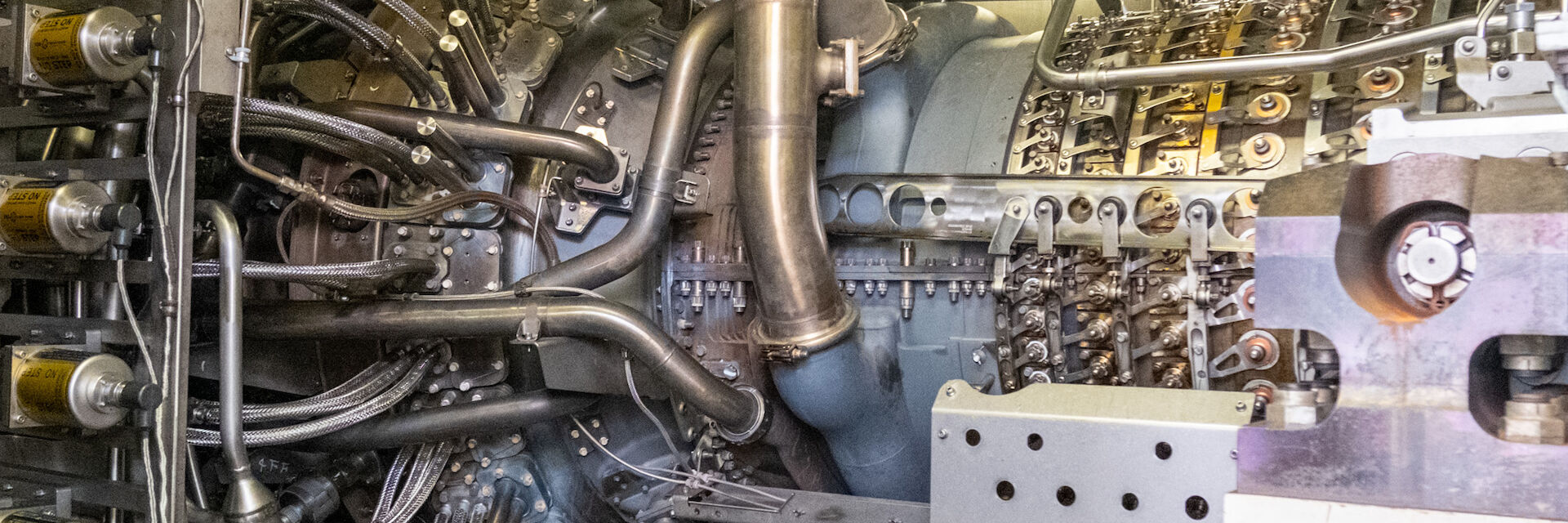
The market for gas turbines has changed more in the last eighteen months than in the previous decade. Order books at the three major OEMs now run into the 2030s, new equipment prices have almost tripled since 2019, and any buyer who needs firm power inside three years has very few routes to it. That has made every available used and unused package unusually valuable, and it has also attracted a good deal of noise.

This note sets out what the current data shows, and explains why, since March 2026, Craigie Engineering Sales & Services no longer lists client gas turbine assets publicly.

Demand: the numbers behind the squeeze

Javier Cavada, who heads Mitsubishi Power in EMEA, told S&P Global in July 2026 that annual gas turbine demand now runs above 100 GW, roughly three times the pre-pandemic average of around 30 GW. "We have never seen anything like this," he said. "The bottleneck is the capacity of the whole supply chain, not the demand or the capital." Mitsubishi's order book is full through 2030, with contracts already signed for deliveries between 2031 and 2034.

The other two majors report the same picture. GE Vernova's second quarter results, published on 22 July 2026, put its gas equipment backlog and slot reservation agreements at 116 GW, up from 100 GW three months earlier, with at least 125 GW expected to be under contract by year end. The company is now taking reservations for 2031 deliveries and is working to lift annual output towards 30 GW by 2030. Siemens Energy reported a gas turbine backlog approaching 69 GW in August 2026 after booking 15 GW of new orders in a single quarter, with lead times across the business of three years and more, and is expanding medium turbine manufacturing towards roughly 100 units a year by 2028.

Wood Mackenzie put numbers on the cost of all this in April 2026. Gas turbine prices are on course to reach US$600/kW by the end of 2027, an increase of 195 per cent on 2019 levels. Global orders reached about 110 GW in 2025 against global manufacturing capacity of 60 to 70 GW. Lead times for large frames now sit at around six years, with smaller machines at 18 to 36 months. The binding constraint is not assembly floor space, it is the hot section: single crystal blade production sits with a handful of suppliers worldwide and cannot be scaled quickly.

Underneath the order books, the demand signal is structural rather than cyclical. The IEA's Electricity 2026 report forecasts global electricity demand growing at 3.6 per cent a year to 2030, around 50 per cent faster than the average of the previous decade, with roughly half of the increase in the United States attributable to data centres. Gas-fired generation is forecast to grow at 2.6 per cent a year against 1.4 per cent over the previous five years. At the same time, more than 2,500 GW of projects sit in grid connection queues worldwide, which pushes developers towards behind the meter and islanded generation, and therefore towards turbines.

The effect on project economics is direct. Enverus noted in August 2026 that new combined cycle costs have more than doubled since 2020, and that operating gas plants are trading at roughly half of replacement cost. When new build costs double and delivery slips to the 2030s, existing plant and available equipment reprice quickly.

Market snapshot, September 2026

IndicatorLatest positionSource
GE Vernova gas backlog and slot reservations116 GW at Q2 2026, up from 100 GW; at least 125 GW expected by year endVernova Q2 2026 results, 22 July 2026
GE Vernova delivery slotsReservations now being taken for 2031Utility Dive, 23 July 2026
Siemens Energy gas turbine backlogApproaching 69 GW; 15 GW booked in one quarter; lead times 3 years plusUtility Dive, 10 August 2026
Mitsubishi Power order bookFull through 2030, contracts signed for 2031 to 2034 deliveryS&P Global, 3 July 2026
Annual market demand~ 100 GW, against a pre-COVID average near 30 GWS&P Global, 3 July 2026
Orders versus manufacturing capacity~ 110 GW ordered in 2025 against 60 to 70 GW of capacityWood Mackenzie, April 2026
Equipment pricingHeading to US$600/kW by end 2027, up 195 per cent on 2019Wood Mackenzie, April 2026
Lead timesAround 6 years for large frames, 18 to 36 months for smaller unitsWood Mackenzie, April 2026
New build costCombined cycle costs more than doubled since 2020Enverus, August 2026
Operating plant valuesTrading at roughly 50 per cent of replacement costEnverus, August 2026
Demand growthGlobal electricity demand up 3.6 per cent a year to 2030; gas generation up 2.6 per cent a yearIEA, Electricity 2026

The squeeze is not confined to the large frames

It would be easy to read the headlines as a story about advanced class machines for hyperscale data centres. The order data says otherwise. Wood Mackenzie's analysis of 2025 orders found that 70 per cent of units ordered were under 100 MW, and 26 per cent were under 20 MW. Advanced class machines of 200 MW and above accounted for only 22 per cent.

That is the band in which most industrial power actually gets built: distributed generation, oil and gas duty, cogeneration, island and mining loads, grid support, peaking, and increasingly bridging power for sites waiting on a connection. It is also the band in which the secondary market is genuinely competitive with new build, because the machines in question can be inspected, refurbished, relocated and commissioned inside a timeframe that a new order simply cannot meet.

For the classes we work with most often, the argument is straightforward. A TM2500 can be mobilised and generating in a matter of weeks. An LM6000 gives roughly 40 to 60 MW with fast start capability and a global parts and service base. A Frame 6B remains one of the most forgiving and widely supported industrial frames ever built, with a deep spares market and well understood overhaul economics. A Solar Titan 130 or a Siemens SGT-800 fits the 15 to 60 MW industrial and cogeneration bracket where availability, not efficiency to the third decimal place, decides the project. In a market where a new order means 2031, a proven machine that can run next year has a different kind of value.

What that has done to the secondary market

Three things, in our experience.

First, pricing now anchors to replacement cost and to time, not to historic used equipment benchmarks. Unused or low hours packages with complete documentation, verified storage history and transferable OEM warranty command premiums that would have looked unrealistic three years ago, and they deserve them.

Second, the scarce commodity is availability, not capital. Buyers with funding are common. Genuinely available, unencumbered assets with clean title are not.

Third, and less helpfully, the volume of second hand paper circulating in the market has risen sharply. Teasers, specification sheets and asking prices for the same handful of packages now move through long broker chains, frequently without the owner's knowledge.

Why we stopped publishing assets in March 2026

Through late 2025 and the early part of 2026 we saw a pattern that will be familiar to anyone who has tried to sell equipment in this market.

Assets we had been mandated to handle began appearing in circulation through parties with no relationship to the owner. Specifications had usually been retyped and were often wrong. Prices had been marked up, or in some cases invented. On more than one occasion the same package was in the market in three or four versions at once, at three or four different prices.

None of that serves a seller. It compromises confidentiality, it undermines price discovery, and it makes a sound asset look shopped, which is the quickest way to lose a serious buyer. It also wastes a great deal of everyone's time, because each version of the offer generates its own chain of enquiries that lead nowhere.

So in March 2026 we changed how we work. We no longer list client gas turbine assets on public marketplaces, in open circulars, or by broadcast email. Assets are marketed by private treaty, to named and qualified buyers, under agreed confidentiality. It is a quieter process and, for our clients, a considerably more effective one.

How private treaty works in practice

  1. Mandate and title first. We confirm who owns the asset, what the seller is authorised to do, and what encumbrances exist, before anything goes to market. If we cannot establish that, we do not take it on.
  2. Controlled release of information. A sanitised summary goes out first. Serial numbers, site identity, photographs, inspection reports and data packs follow only under NDA and, where appropriate, a non-circumvention agreement.
  3. Named buyers, approached directly. We go to a defined list of operators, developers, funds, lessors and EPCs who are credible for that class and that geography, rather than broadcasting to a market list.
  4. Verified technical position. Fired hours, starts, borescope and inspection history, preservation and storage evidence, spares and balance of plant, plus OEM warranty transferability where it applies.
  5. A structured route to closing. Heads of terms, deposit and escrow arrangements, sale and purchase agreement, then dismantling, logistics and export.

It is slower to start and considerably faster to finish. Over thirty years and more than 194,000 MW appraised or sold across 130 countries, it is the method that has consistently produced the best outcome for the party that actually owns the equipment.

Recent private treaty activity

Our private treaty work over the past year has covered the following classes:

- GE TM2500 mobile aeroderivative packages
- GE Frame 6B (MS6001B) industrial frames
- GE LM6000 aeroderivative packages
- Solar Titan 130 units and combined cycle plant
- Siemens SGT-800 industrial turbines

If you are holding an asset

A short checklist, based on what actually moves equipment in this market:

- Establish and document title and encumbrances before you go to market, not after a buyer asks.
- Assemble the technical file early. Fired hours, starts, inspection and overhaul records, preservation regime, storage conditions, spares list and balance of plant scope.
- Get an independent valuation appropriate to the purpose, whether fair market value, orderly liquidation value, net orderly liquidation value or forced liquidation value. Asking prices circulating in the market are not evidence of value.
- Control the release of information. Once a specification sheet is loose, you cannot recall it.
- Appoint one route to market. Multiple unauthorised channels reduce your price, they do not raise it.

If you are buying

- Verify the chain. Ask who holds title, and ask to see evidence of the seller's authority to sell.
- Treat any package offered to you by several parties at several prices as a warning, not an opportunity.
- Budget properly for dismantling, transport, refurbishment, conversion where frequency differs, and recommissioning. On relocations these can rival the purchase price.
- Get the asset inspected by someone whose only interest is your position.

Talk to us

If you are considering the sale or purchase of gas turbines, generators, transformers or complete power plants, we would be glad to have a confidential conversation. We act on both sides of the market, we appraise assets for owners, lenders, lessors, insurers and insolvency practitioners, and we do not publish anything we are asked to keep private.

[Get in touch]

--
Ben Craigie
Managing Director - CESS

Sources

- GE Vernova, [Second quarter 2026 financial results](https://www.gevernova.com/news/press-releases/ge-vernova-reports-second-quarter-2026-financial-results-raises-2026-financial), 22 July 2026
- Utility Dive, [GE Vernova gas turbine backlog climbs to 116 GW](https://www.utilitydive.com/news/ge-vernova-gas-turbine-backlog-climbs-to-116-gw/826039/), 23 July 2026
- Utility Dive, [Siemens Energy's gas turbine backlog nears 70 GW as company expands manufacturing](https://www.utilitydive.com/news/siemens-gas-turbine-backlog-nears-70-gw-as-company-expands-manufacturing/827390/), 10 August 2026
- S&P Global Commodity Insights, [Mitsubishi Power gas turbine orders stretch to 2030 amid AI, security demand](https://www.spglobal.com/energy/en/news-research/latest-news/energy-transition/070326-interview-mitsubishi-power-gas-turbine-orders-stretch-to-2030-amid-ai-security-demand), 3 July 2026
- Wood Mackenzie, [Gas turbine prices soar 195% as market faces supply-demand crisis](https://www.woodmac.com/press-releases/gas-turbine-prices-soar-195-as-market-faces-supply-demand-crisis/), April 2026
- Power Engineering, [Gas turbine prices climb 195% as supply crunch reshapes power development](https://www.power-eng.com/gas/turbines/gas-turbine-prices-climb-195-as-supply-crunch-reshapes-power-development/), April 2026
- Enverus, [The queue before the queue: GEV's backlog extends to 2031](https://www.enverus.com/blog/the-queue-before-the-queue-gevs-backlog-extends-to-2031/), August 2026
- International Energy Agency, [Electricity 2026](https://www.iea.org/reports/electricity-2026/executive-summary), 2026